
Team effectiveness · For the intact executive team
Team coaching
Transforming a team of leaders into a leadership team, one that trusts fiercely, debates courageously, and executes flawlessly
Executive teams in paramedic services, public health units, hospitals, LTC homes, hospice, seniors' and community care, where clinical, operational and administrative leaders have to act as one team under real pressure. In high-performing organizations, most leadership teams are not dysfunctional. They are suboptimal, operating below their full potential not because of lack of effort, but lack of deliberate engineering. When brilliant leaders fall short as a team, it is rarely a failure of intent; it is a failure of design. Only 17% of C-suite executives report regularly collaborating on long-term interdependent work, down from 34% the year before (Deloitte, Global Human Capital Trends, 2019).
Led by Sandeep Aujla, MA, PCC · Former CHRO
Move away from
- • Surface harmony masking real tensions, clinical, operational, and administrative
- • Hesitant deliberations slowing critical decisions under acuity, audit and union dynamics
- • Siloed action blocking momentum across programs, services and sites of care
- • Quiet erosion of trust as staffing pressure compounds
Move toward
- • A team that trusts fiercely, debates courageously, and executes flawlessly
- • Bold decisions the team owns, and that hold past Monday
- • Aligned action across programs, sites and the care continuum
- • A leadership team patients, staff and the board can feel, deeply aligned toward its North Star
Decision tool for fit · About 2 minutes
What kind of support would help most right now?
You may know something needs attention, but not yet know the right form of support. Ten short questions will help you clarify the challenge, the level at which it sits, and the type of support most likely to help, whether that is coaching, team coaching, advisory, a learning program, speaking, or a retreat.
- Name the challenge and the level it actually sits at
- See which form of support fits, and why
- Get a clear next step, with no score and no sales pitch
The cost of misalignment
What a misaligned leadership team quietly burns
Executive teams rarely fail loudly. They lose hours each week to re-litigated decisions, unspoken disagreements, and duplicated work. Multiply that across a year and the number gets uncomfortable. Adjust the sliders to see the cost of waiting.
Rework, re-litigated decisions, sidebar conversations, and unresolved conflict.
A single stalled strategic call, hire, or investment.
Estimated annual cost
$420,288
per year
- Friction hours across the team$170,288
- Delayed or reversed decisions$250,000
Illustrative. Excludes attrition of high performers, which research consistently ranks as the largest hidden cost of a misaligned team.
The Framework
Framework
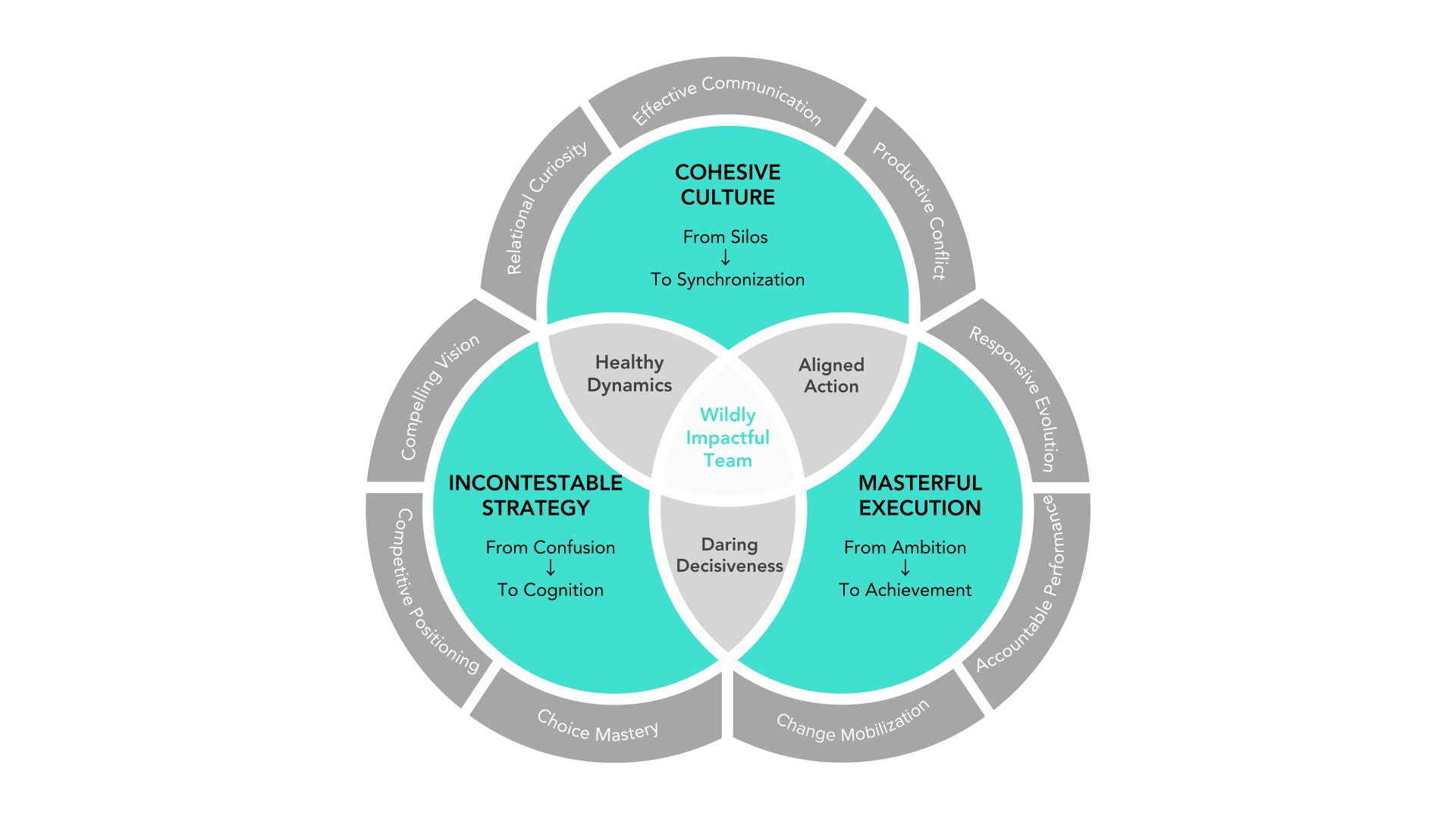
Healthy dynamics
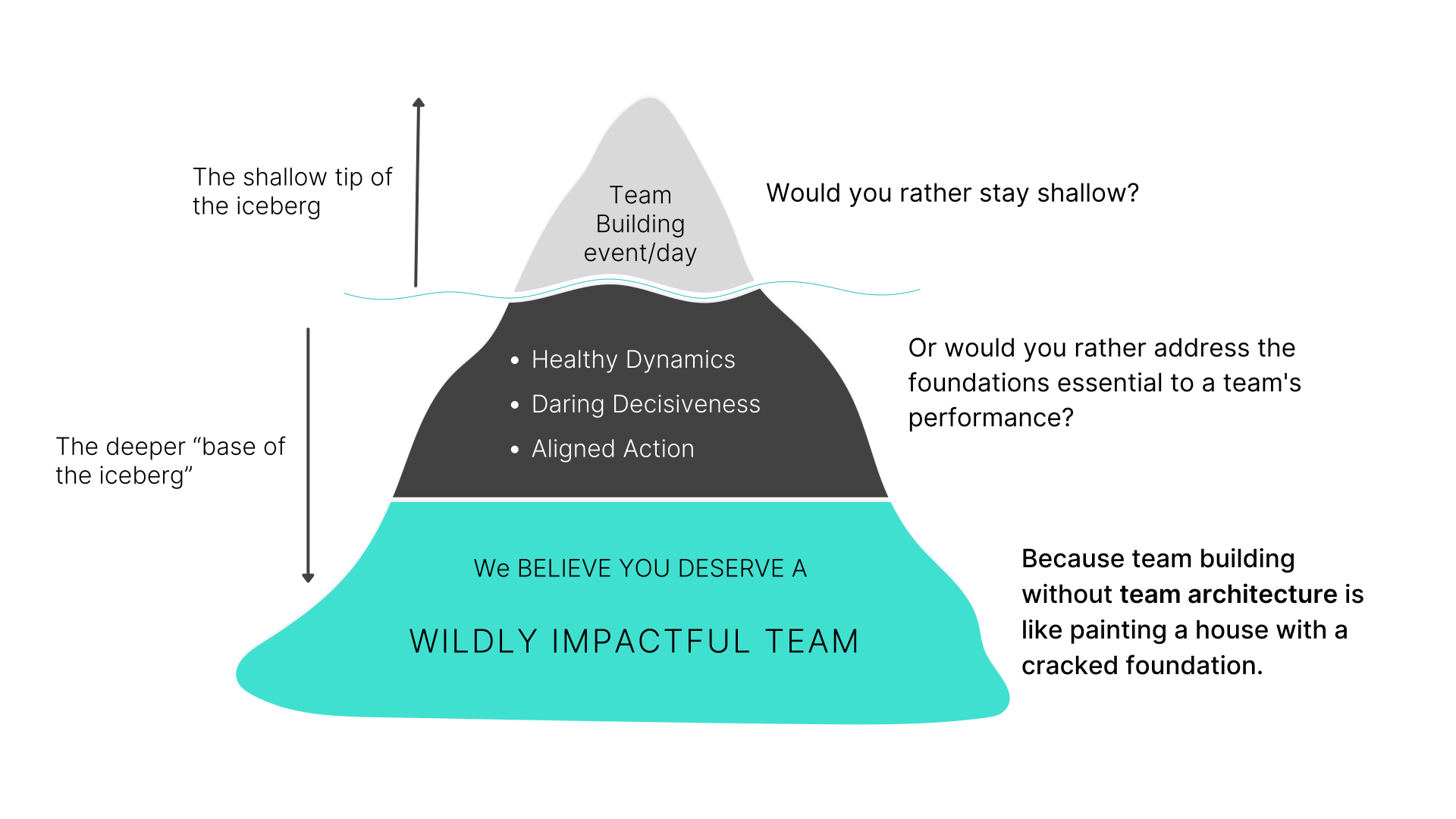
Strong teams are not nice, they are real. Healthy dynamics allow you to build strength through trust and psychological safety. Relationships are the infrastructure of results. Without real trust and open debate, quality decisions cannot be made and collaboration stays surface-level and fragile. With it, teams move from polite coexistence to bold co-creation, challenging ideas, strengthening solutions, and staying resilient under pressure. Without it, misunderstandings fester, alignment fractures, and innovation stalls.
Daring decisiveness
Indecision costs more than mistakes. Daring decisiveness allows you to choose thoughtfully, boldly and swiftly. Momentum is a leadership team's greatest asset. Delayed or diluted decisions erode confidence, opportunity, and credibility, after all, a team will be remembered by the decisions it made. With it, teams navigate uncertainty with clarity, speed, and unified resolve, making choices they own even when the stakes are high. Without it, hesitation breeds confusion, opportunities slip away, and competitors move faster.

Aligned action
In great teams, every move is part of the same play. Aligned action ensures that what gets decided gets done, together. Without it, initiatives stall, energy dissipates, and decision-making loses urgency without clear accountability loops. With it, teams move as one body, not disconnected parts. Execution becomes seamless, not siloed. Every leader knows their lane, every hand knows the play, and the team wins as a unit.
Who this page is for
You might be reading this for yourself, or for someone else
About a third of the people who reach out are sourcing on behalf of someone they lead, partner with, or report to. All of these doorways are welcome.
The team leader (Chief, VP, CMO, CNO, Executive Director)
You own the team's results and want it to operate as one, under acuity, audit and union dynamics.
A team member on the executive team
You see what's not being said in the room and want a serious intervention that holds.
The CEO or board sponsor
You're investing in an exec team whose collective performance is what actually gets measured, and you want measurable proof.
HR / People & Culture / OD leader
You're sourcing team coaching for a clinical, operational or administrative leadership team and need a partner fluent in healthcare conditions.
Where team coaching most often earns its keep
Strategy → execution, owned by the team
Most executive teams have a strategic plan. Few have a team that can execute it together. We help your team translate strategy into seamless execution, naming the two or three key impact metrics that matter, sequencing change against clinical and operational realities, and building the change-management muscle into how the team leads, decides and holds each other accountable. Evidence-based (I-O Psychology, organizational design, taught at executive and graduate levels), informed by practice, and always contextualized to your service.
- Strategic narrative the whole team can defend in any room
- Two to three key impact metrics, agreed, owned, visible
- Change-management cadence built into the team's operating rhythm
- Cross-program / cross-site alignment across the care continuum
What's included
Clear scope, real work
- 6-month engagement with the intact leadership team + team leader
- Kick-off tri-lateral meeting: Sponsor, Team Leader, and Coach to align on expectations and the Sponsor's role
- Psychometric assessments for every team member (team effectiveness, working geniuses, thinking styles) plus a 360-style evaluation via confidential interviews
- Full-day Team coaching Kick-Off to co-create the Team Charter and coaching goals
- Three live team-meeting observations with feedback on divergent thinking, sensemaking and decision-making
- Monthly confidential 1:1s (20–30 min) with every member, feeding the agenda for the 3-hour monthly team session
- Monthly Sponsor + Team Leader + Coach check-ins — no surprises, ICF-aligned confidentiality
- Pre/Post Team Effectiveness Assessment to measure the shift
Questions
Before you ask
Who needs to be in the room?+
The intact leadership team and the leader of that team. Cross-functional sponsors join key milestones.
How is Team coaching different from therapy, training, or advice?+
Team coaching is a facilitated dialogue between the coach and the leadership team to find creative ways to improve performance, accelerate critical initiatives (including strategy execution), and strengthen cohesion. It is forward- and solution-focused. It is not advice, therapy, or counselling, and it is not directive; the team owns every choice and action.
What's the smallest useful engagement?+
A 6-month targeted lever on Culture, Strategy, or Execution. The full Triad of Team Brilliance is 18 months.
Do you help us turn our strategic plan into execution?+
Yes, it's one of the most common reasons teams hire us. We work the full arc from strategic narrative to two or three key impact metrics, change-management cadence, and the cross-functional behaviour the plan actually requires. Grounded in I-O Psychology and organizational design.
What does a Team coaching engagement actually include?+
Six months, sequenced deliberately: (1) a tri-lateral kick-off with Sponsor, Team Leader and Coach; (2) a 1:1 with the Team Leader on vision and current state; (3) an initial team meeting to introduce the program; (4) psychometric assessments for every member plus a 360-style confidential interview round; (5) a full-day Team coaching Kick-Off to co-create the Team Charter; (6) three live team-meeting observations with feedback; (7) monthly confidential 1:1s (20–30 min) with every member the week before each 3-hour monthly team session; (8) a Post Impact Assessment at the close.
How is confidentiality handled with the Sponsor (CEO, board, HR)?+
All coaching conversations are strictly confidential and held to ICF standards. Only the client's name, email and total coaching hours are retained after the engagement. The Sponsor shares their vision and goals at onboarding, and together with the Team Leader and Coach we set a cadence of periodic check-ins for general updates and feedback — so there are no surprises at the end. The Coach will never meet with the Sponsor alone about the team's coaching work; the Team Leader is always in the room. The only exceptions to confidentiality are intent to harm self or others, or illegal activity in the organization.
Who is the Sponsor and what is the three-way partnership?+
The Sponsor is the executive commissioning the work (CEO, board chair, senior VP, CHRO). The engagement is designed as a true partnership between Sponsor, Team Leader and Coach: aligned goals up front, ongoing feedback and support from the Sponsor, and monthly touchpoints so the investment is protected. This is not punitive or performance management — it is deliberate investment in the team's growth and the ROI of the engagement.
How are the goals for the engagement set?+
The Sponsor names the strategic reasons for the investment (setting the team up for success, healthy dynamics, daring decisiveness, aligned action). The specific six-month goals are then finalised after the team completes its initial state evaluation — the Team Effectiveness Assessment and the 360 evaluation — so we are engineering against real data, not assumptions.
What assessments will the team complete?+
Psychometric assessments for every Leadership Team member covering current team effectiveness, individual contributions, working geniuses and thinking styles, plus a 360-style evaluation conducted through confidential interviews before the coaching sessions launch. A Post evaluation at the end measures the coaching impact.
How much of the team's time will this take?+
One full-day kick-off, three team-meeting observations (full first meeting, first hour of the second, final hour of the third), three consecutive hours of Team coaching each month, and a 20–30 minute confidential 1:1 for each member in the week prior to each team session. In-person sessions can be arranged with at least 15 days' notice; otherwise sessions run on Zoom.
What does the team need to bring for this to work?+
A genuine commitment to the process, openness to observations and coaching, showing up on time and fully present (no phones, no email), completing agreed assignments, honest feedback midway and at the close, and a shared commitment to the team's rules of engagement. The team owns its choices and actions; the Coach designs the container.
How do I know where my team is at now?+
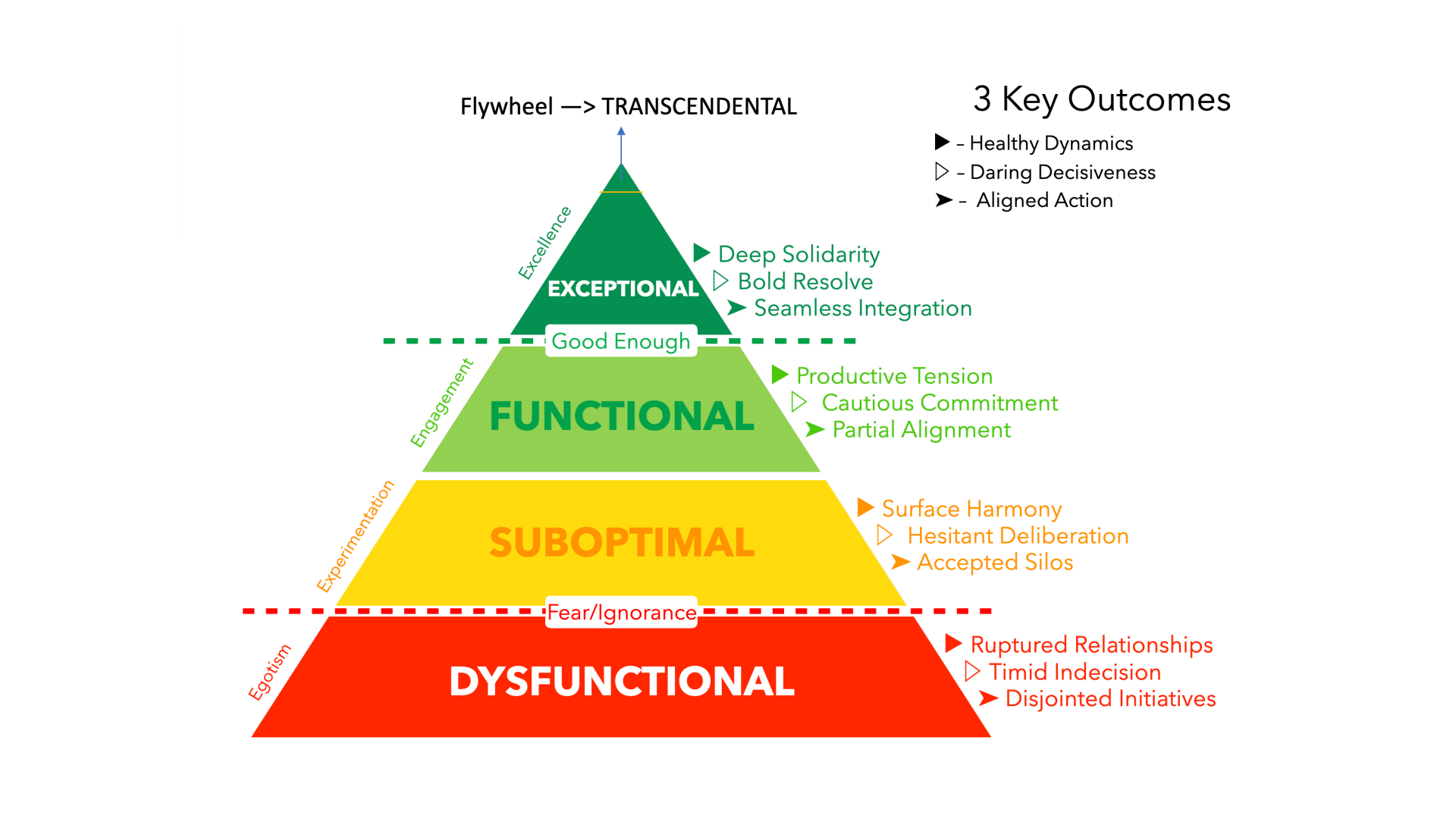
We use the Peak Synergy Pyramid to locate your team on the climb from suboptimal drag to fully architected brilliance, before we recommend a shape of engagement. Combined with the Pre-Team Effectiveness Assessment and sponsor + team-leader conversations, you'll have a clear, evidence-based read on which lever to engineer first.
What are the benefits of committing to team coaching rather than an executive retreat?+
Both are real work; they sit at different points on the same arc. A well-designed, purpose-driven retreat is often the right starting point when budgets or timelines won't yet stretch to a longer engagement, and it delivers meaningful value in the room. Team coaching is the engineered shift that addresses the foundational, deeper essence of team dynamics and enables institutionalized behaviour change. Many of our team-coaching engagements begin as a single off-site and grow from there.
How do we know this works?+
Unlike many coaching programs, we don't just hope you'll see a difference, we measure it. A Pre/Post Team Effectiveness Assessment aligned to strategic outcomes gives you clear proof of the behavioural shifts and the business impact you're investing in.
Watch
The Leaders' Lens for teams doing hard work together
Short clips from our library, practical thinking on team dynamics, decisive collaboration, and aligned execution in healthcare.
Watch the full Team coaching playlist


In their words
What changes for the healthcare leaders we work with
Names and organizations withheld by request, healthcare leadership work is confidential. Attributed quotes available on request under NDA.
Sandeep has made an indelible difference to our entire team, and I speak of her and her coaching on a daily basis to friends, family, and fellow team members.
I really appreciated Sandeep's approach to sharing insights from her observations of our team meetings. It was an enlightening experience to see how the whole team shows up and how we individually contribute to the team dynamics. Equally fascinating were the changes over the time that we did team coaching. Really enlightening.
Even after 6 months of completing our engagement with Sandeep, the team is still benefiting from the outcomes of our work with her. She has made a phenomenal difference in how our leadership team works, and I constantly see leaders referencing learnings from our work with Sandeep. The investment of money, time, and energy has been truly worth it.
Sandeep is an extraordinary coach and leadership advisor. She has created powerful, elegant tools and frameworks to help leaders and their teams make breakthroughs in their performance. She is in the top 1% of the top 1% of coaches in terms of her ability to help clients focus on what matters most, gain new awareness and insights, and choose the best path forward.
Sandeep is the most incredible team coach with a remarkable skillset. She has taught me so much, validated our concerns, helped us find solutions to challenges and showed us who we are in ways we haven't seen before. Much of what she shared, we have implemented or used as guides for further work. She has provided strength and insight!!!
I engaged Sandeep to help my team in a strategic plan to advance our combined research, educational, clinical and policy-related goals. She rapidly analyzed our situation, understood and appreciated our context and team dynamics. Sandeep used her excellent, dynamic skill set to elicit many solutions and commitments from my team. In other words, she helped us unlock our potential. Lastly, her recommendations to me as the team leader were practical, realistic, and implementable. Eternally grateful for the advice.
Sandeep played an important role in guiding our leadership team at a critical point of transition. Our leadership team is so impressed with Sandeep's coaching that we are thinking of giving her climate change, ending world poverty, and peace in the Middle East next, given how she seems to be able to do the seemingly impossible things.
As a team coach, Sandeep creates the conditions for real transformation. She listens closely, challenges respectfully, and helps individuals and teams uncover insights that lead to better thinking, stronger relationships, and measurable progress. Her approach is never about quick fixes, but instead about sustainable change rooted in clarity, intention, and trust.
Book directly
Book an exploratory call
A confidential 30-minute conversation to understand your context and explore whether this is the right fit. Pick a time directly in my calendar.
Open in new tab